

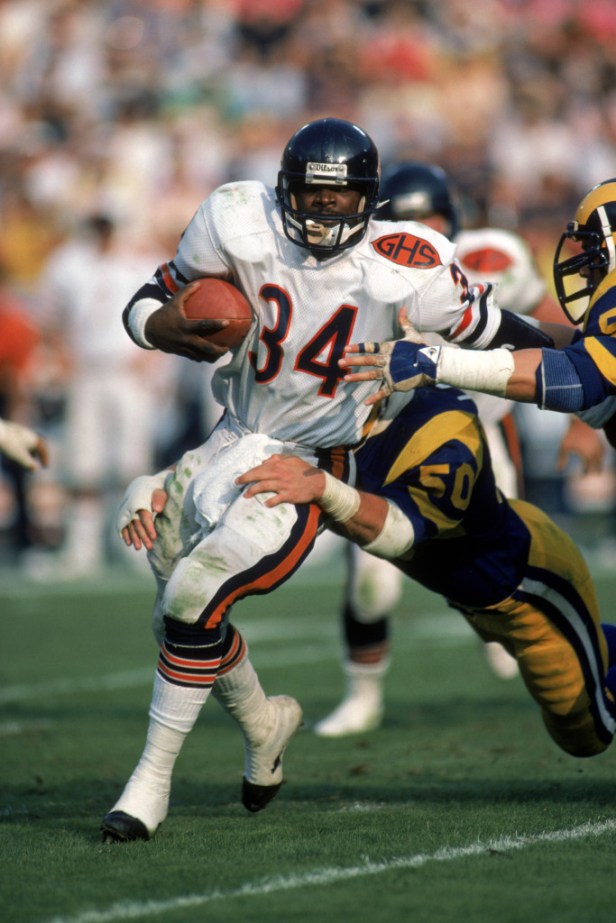
Football season has just started. It’s a time of year I always look forward to and follow closely. The sport has already seen its share of ups and downs from its most spotlighted platforms in the professional and collegiate levels. However, there’s always something that surprises me from the very start every single year – the instantaneous mass of injuries.
Now, football is a physically demanding contact sport and injuries are part of the game, to an extent. As a player, you can control yourself on the field, but not the 21 other variables around you. People fall into your knees at weird angles, fingers get caught and twisted up in jerseys, and occasionally a 300-pound lineman falls on your ankle. Stuff happens. But what I’m referring to more here are the amount of injuries that result from the non-freak occurrences, like conditioning and non-contact drills.
How is it that even some of the most athletically gifted humans on earth strain their quad, calf, groin, or hamstring every August when they have to run somewhat close to top speed? How does a chunk of an NFL team’s roster start training camp on injured reserve when all they’ve done up to that point is walk-throughs and passing drills? The answer, I believe, lies in strength.
Of course guys playing football at a high level would be deemed “strong” to many normal people who don’t find themselves to be professional athletes (that’s most of us by the way), but strength is a relative metric that can only be measured up to the demands of the task at hand. For example, a 500 pound squat is impressive by most standards, but pressing 500 pounds over your head is the stuff of legends, though both actions involve producing 500 pounds of force against a barbell. However, if you’re a heavyweight olympic weightlifter trying to win a gold medal, you’d better be able to shove at least 500 pounds over your head and be able to squat a whole lot more. Likewise, a defensive end in the NFL needs to be stronger than the average guy at the office, because odds are the average guy doesn’t have to grapple with 330-pound behemoths in his cubicle.
In any sport, the calendar year is always, at the very least, split into the season and subsequent offseason. It is typical to see desired physical qualities developed during the offseason, whereas they are likely to only be maintained during the season due to the physical demands of the sport itself and the reality of burning the candle at both ends. The primary physical quality that should be emphasized in any offseason is strength, since it concerns the production of force against the external environment – something that is pertinent to any sport in existence. Any other physical quality that involves force production is reliant on strength, including speed, acceleration, balance, and perhaps most importantly, resistance to injury.
An often overlooked benefit of meaningful strength training is the adaptation it incurs to the structure of the tissues themselves. Yes, muscle fibers get bigger and better at producing force, but those fibers are much less likely to tear in any given situation after they’ve been loaded with increasingly heavier weights over time. The same is true for connective tissue like tendons and ligaments, as well as for bones as their density increases from productive strength training. Altogether this makes for a decreased risk of straining, tearing, or breaking anything.
Hence, you would think that elite-level athletes would be prepared for the physical demands at the start of the season, at least in theory… the answer to the massive amount of injuries at the start of many sports seasons lies in the demands of the previous offseason training, or lack thereof.
The latter issue, the overall lack of offseason training, is a little more obvious. You sit around all off-season and do minimal training, so you get a quad strain the first time you run a drill at practice – a seemingly minor demand for a seasoned athlete, but relatively, the drill is a hell of a lot more demanding than all the nothing you did all offseason. This situation shouldn’t be surprising to anyone, including the injured player, and it’s something I personally witnessed from high school football well into college. Guys who trained hard in the offseason rarely got hurt. Guys who didn’t train in the offseason were always hurt. Coincidence?
Then lies the issue of the demands placed on the athletes during offseason training. Remember when I mentioned the structural adaptations of tissues as a result of meaningful strength training? The key word there is “meaningful,” as in: the training means should be selected in accordance to the adaptations that are desired… not in accordance to what looks cool on social media, what is easy, or what consists entirely of a skill specific to the sport. I’ve seen so many atrocious training means and protocols being implemented by strength and conditioning “professionals” in the last decade that it’s making me shudder thinking of some of them right now. I’ll just break it down like this: no elite athlete has ever increased the strength or structural integrity of their muscles, bones, or connective tissues by doing training programs that involve circus-like balancing acts, obsessive footwork drills, excessive sport skill practice, or copious amounts of stretches disguised as “exercises.” What we do know increases these physical qualities, however, is periodized strength training that achieves heavier loading over time.
Although, sadly, many coaches and trainers are still able to hide behind many of their elite athletes’ far-right-of-the-bell-curve genetics, which still make them look superhuman in spite of the silly things they do in the offseason that their coaches claim are difficult. I’m sure balancing on a stability ball and catching small objects being hurled at you probably is difficult. But squatting 600 pounds below parallel is also difficult, though in a much different capacity. If you’re an NFL running back, which feat do you think is the more worthwhile goal? Which quality do you think will benefit you more when the season starts?
I find it interesting that some of the longest-lasting guys in football (that were also known for never being injured, despite playing very physical positions) like Walter Payton and James Harrison were also famous for how strenuous their offseason training was. I think people forget that too often, including current players. I’m not sure exactly what those two guys used to do entirely, but I do know that they were known for moving huge weights and running hills, which certainly sounds much more intense than what a lot of guys do now in their offseasons.
So what is the biggest takeaway from what has turned into this rant of mine? Strength is resilience, and building strength is what the offseason is for. Sport-specific skill is meant to be developed through sport practice. A linebacker becomes better at reading gaps, covering receivers, and tackling ball carriers by practicing his position on the field. The offseason should almost entirely be reserved for just making that linebacker bigger, stronger, and faster. And aside from continuously practicing the skill components of his position on the field, a bigger, stronger, faster linebacker will inevitably get off blocks easier, hit harder, and make more tackles.
There’s also a pretty good chance that he’ll do so without injury.

 Strength Scrolls